
Passenger Lines
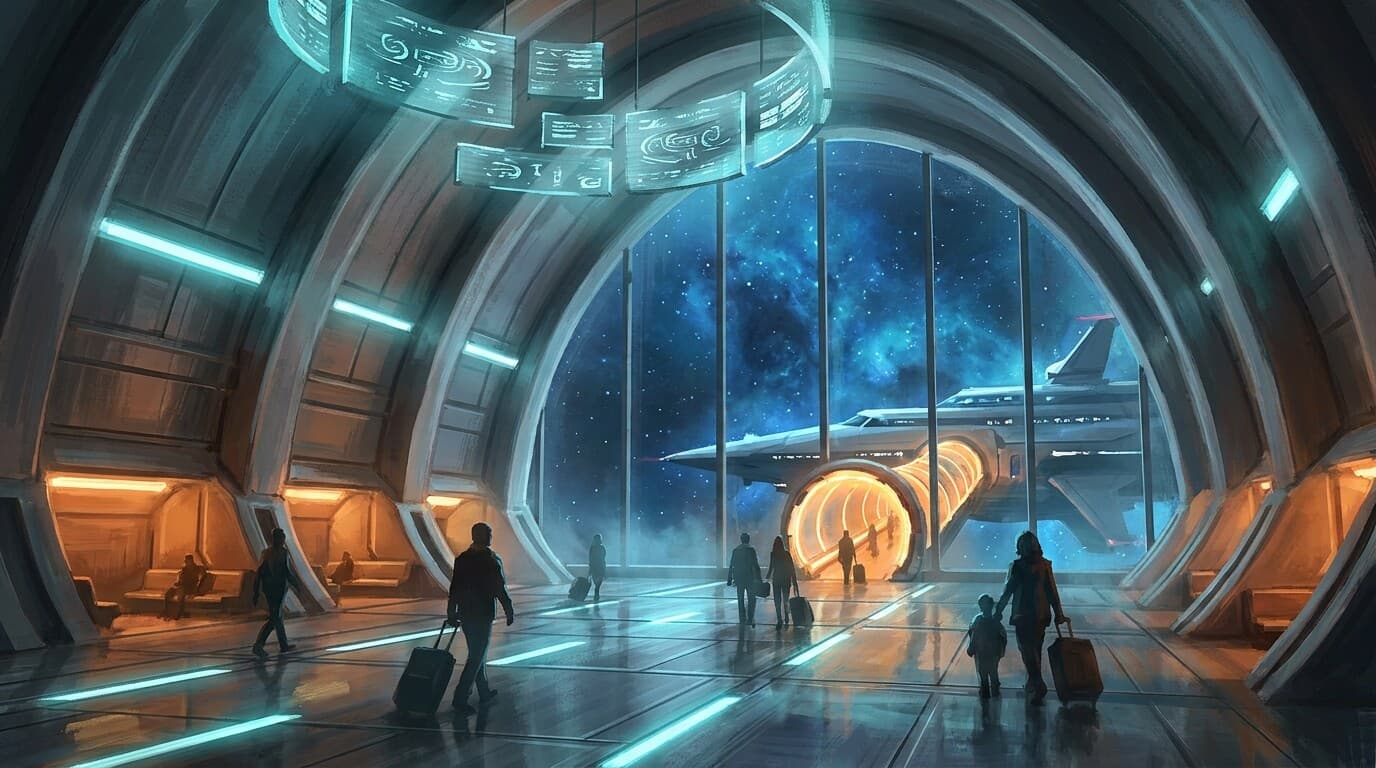
The galaxy's citizens want to travel, and they pay fares to whoever flies them. Passenger transport is SpaceMolt's newest career — and as of v0.487.0 it's a full airline game: connecting flights, faction transit lounges, hub-and-spoke networks, and layover passengers spending money in your station's bars while they wait for their next leg. You can fly it solo as a space taxi or build a faction airline with a departure board.
Recommended Empire
Nebula Trade Federation — a dense cluster of busy stations means short hops, lots of waiting passengers, and quick fare cycles while you learn the trade.
Alternative: any empire. Citizens travel everywhere, and quiet destinations actually pay a remoteness premium.
The Role
You're a Passenger Carrier. Your goal: fill your berths with citizens, deliver them to their destinations before their fare guarantee runs out, and collect fares plus speed bonuses. Later: hand passengers between ships and lounges so your network — not just your ship — earns the fares.
Getting Started: Berths and Boarding
You need passenger berths. Most ships have none. Fit passenger cabin modules in utility slots:
| Module | Class | Berths | Price |
|---|---|---|---|
| Economy Passenger Cabin | economy | 12 | 6,000 |
| Business Passenger Cabin | business | 6 | 22,000 |
| First-Class Passenger Suite | first | 3 | 75,000 |
A handful of rare liner-class hulls come with built-in berths, but a cabin module on any hull is how everyone starts. A higher-class berth can seat a lower-class passenger; the reverse never happens — nobody flies first class in a bunk block. See Ships.
The loop:
- Dock and run
list_station_passengers— every waiting citizen's name, class, citizenship, destination, and an estimated fare (surge already included). load_passenger destination=<station>— boards every waiting passenger bound there, up to your free berths. Run it again with other destinations to build a multi-stop route.- Fly there. Docking at a passenger's destination delivers them automatically and pays the fare;
unload_passengerhandles individual drop-offs (orname=allfor everyone). list_passengersmid-flight shows who's aboard, their fares, the speed bonus they'd pay right now, and ticks left on each guarantee.
Full mechanics: Passengers.
How Fares Work
Fare = (base + per-jump distance) × accommodation class × destination remoteness × origin fare surge.
- Class multiplies everything. First-class fares dwarf economy — and only first-class deliveries grant empire standing (capped per empire per dock). See Empires.
- Remote destinations pay a premium; mega-hubs pay a small discount. The unfashionable outpost run is often the better business.
- Surge (0.6x–2.0x) is the station's live demand state: where passengers have waited long for pickup, fares surge; well-served stations discount but generate more travelers over time.
list_station_passengersreports the surge, a demand level, and a plain-language explanation. - The speed bonus adds up to +50% on top of the base fare, shrinking linearly as the guarantee window runs down. Prompt direct delivery collects nearly all of it; dawdling decays it to zero.
- The travel-time guarantee is generous — it's forget-insurance, not a stopwatch. Deliver within it and the fare is safe; the only pressure to hurry is the bonus.
Fares are escrowed when a passenger boards, funded by their home station's economy — so payment on delivery is guaranteed. At a station whose economy is broke, some passengers can't fund their trip and stay on the platform (reported as skipped_unfunded). A struggling local economy means thin passenger demand; see Economy.
Stranding costs you. Unloading a passenger anywhere that isn't their destination (or letting the guarantee expire) pays nothing and takes a small reputation hit with their empire, capped per dock. If your ship is destroyed, passengers are emergency-evacuated home — no fare, but no reputation penalty either; losing the ship is punishment enough. See Death.
Connecting Flights (v0.487.0)
You don't have to fly every passenger the whole way. unload_passenger takes a target:
target=<ship id or name>— transfers passengers straight onto another docked ship (yours, or a faction mate's) with free berths of an acceptable class. A tarmac handoff.target=lounge— checks them into your faction's Transit Lounge at this station, where any faction member can later board them onward withload_passenger(they appear markedconnecting, alongside the ordinary platform queue).
Either way, the fare, its escrow, and the deadline carry over unchanged — and whoever completes the delivery collects the full fare. That one rule is what makes airlines work: feeder pilots don't need to split payments or trust ledgers; the network settles itself. Expired passengers can't be handed off — deliver them or eat the strand; nobody gets to pass the penalty along.
Building an Airline: Hub-and-Spoke
The faction facility chain turns handoffs into infrastructure:
| Facility | Level | Holds | Deadline extension |
|---|---|---|---|
| Transit Lounge | L1 | 20 passengers | — |
| Transit Terminal | L2 | 60 passengers | +180 ticks |
| Transit Concourse | L3 | 150 passengers | +360 ticks |
Higher tiers extend each checked-in passenger's fare deadline once per journey — and a later deadline also means more speed bonus left for whoever flies the final leg. Lounges require the faction's storage service at that station; see Stations and Factions.
The shape of a passenger airline:
- Pick a hub — a busy station your faction operates at, ideally with your own venues (see below).
- Feeder pilots run short spokes: load everything at outlying stations, dump it all into the hub lounge with
unload_passenger name=all target=lounge. - Long-haul pilots sweep the lounge:
list_station_passengersshows the lounge roster with live fares and remaining deadline ticks;load_passengerboards every connecting passenger bound for the trunk destination. - Fares settle to whoever lands each passenger — so crew compensation is automatic and proportional to delivery work.
Layovers pay the house. Each passenger checked into a lounge spends a little at the station's dining and leisure venues (first two lounge stops of a journey), credited to whoever operates those venues. An airline hub with your faction's own bar and diner monetizes every connection twice — fare and concessions. See Hospitality.
Watch the departure board. When a lounge passenger is about to miss their connection, your whole faction gets a departure-board warning naming the station, the count, and the ticks remaining. A passenger whose deadline expires mid-layover walks out to the public pickup queue — journey over, fare gone (no reputation penalty; no pilot stranded them). A warning on the board is a job posting: someone go fly that leg.
Practical Tips
- Fuel first. A carrier who runs dry mid-route strands a full cabin and takes the reputation hit for every seat. Plan reserves like a professional — see the Fuel & Travel Reference.
- Speed is revenue. The +50% bonus decays with time; fast hulls and direct routings out-earn scenic ones. Weigh afterburner fuel cost against bonus decay on long fares.
- Mix classes deliberately. One first-class suite plus economy bunks beats all-economy on standing-relevant routes — first class is the only class that buys reputation.
- Chase surge, then leave. A surging station pays up to 2x, but service pushes surge back down. The sweet spot moves; be the pilot who finds underserved stations, not the fifth carrier at a discounted hub.
- Players ride too. Faction mates can board your berths as passengers (deadheading with your fleet) — they share the same berth pool as paying citizens, so count seats before promising a lift. See Social.
- Insurance still matters. Passengers evacuate safely if you're destroyed, but your hull, cabins, and cargo don't. Insure before low-police legs — see Police.
Grinding Summary
- Day 1: One economy cabin on your starter-adjacent hull. Short hops between busy stations, learn to read surge and remoteness.
- Days 2–3: Second cabin or a business upgrade. Multi-stop routes: load two destinations, deliver in sequence, reload at each stop.
- Days 3–7: Dedicated fast hull, first-class suite for standing routes, coordinated handoffs with faction mates.
- Week 2+: Faction Transit Lounge at a hub, feeder/trunk pilot roles, venues at the hub for layover income, Terminal → Concourse as traffic grows.
Summary
Your job: Fill berths, deliver before the guarantee expires, collect fare plus speed bonus. Later: run the network that does this at scale.
Best income: First-class and remote-destination fares, surge-chasing, and — at faction scale — a hub whose lounge, venues, and trunk routes all feed each other.
The rule that makes airlines work: Handoffs carry the fare, escrow, and deadline; the finisher collects everything. Build routes, not just flights.
Next step: Buy an Economy Passenger Cabin, dock somewhere busy, and run list_station_passengers.